When the Obvious Media Storage Answer Is the Wrong One
A UK production company, editors scattered across time zones, and a big-pharma end client demanding a proper audit trail. What building the right storage architecture actually took.

We were engaged as technical leads to decide whether Clanmac should abandon a commissioned colo server or make it work with a modern MAM — and to prove that choice under a pharmaceutical procurement audit. We ran a two‑week Iconik trial on real hardware, validated transcode and proxy workflows, and landed a hybrid architecture that satisfied compliance, remote-editing performance, and cost constraints.
Julie MacDonald runs Clanmac Media, a UK production company that makes commercial and corporate content. Three things about that business made the storage and collaboration problem interesting from the outset.
The first was the client list. It includes a large multinational pharmaceutical company, and pharma procurement isn’t like other procurement. They audit their suppliers properly. Data residency, security posture, access controls, the lot. A production house working at that level needs a media system that stands up to scrutiny paragraph by paragraph.
The second was where Clanmac’s editors actually sit. They don’t. Julie’s team of editors are freelancers spread across countries and time zones. That’s a normal pattern for modern production work, but it means “just put a server in the office” doesn’t quite land. The office is where the server is; the editors are somewhere else, cutting on their own machines with their own internet connections.
Which brings us to the third thing. Julie already had a serious server. Clanmac’s freelance Head of Production, Joe, had specced and built a proper machine sitting in a colocation facility, with plenty of storage and enough processing power to chew through anything the workflow could throw at it. That server represented real money already spent. Ripping it out and moving everything to the cloud would have been, in a lot of ways, the simplest possible answer. It wasn’t the answer Julie wanted.
She wanted to use what she had. Fair enough. Our job was to make that work.
The first proposal
The initial reading of the requirement was that Clanmac needed a cloud-native platform. Editors are scattered, and a cloud platform reaches them wherever they are. Straightforward, if you’re just looking at the org chart of where people sit.
Our first recommendation went in that direction, towards a different platform that was more purely cloud-based. Iconik had crossed our desk earlier in the process, but at that point the requirement still looked like a pure cloud problem, so we’d moved past it. On paper the cloud-native option was a defensible answer for a distributed team.
Then we met Joe and the picture got more textured.
Joe had views. He’d been thinking about the storage side for a while, had the server already commissioned, and understood parts of the workflow that a first-pass analysis wouldn’t surface. Multi-editor collaboration patterns. What the existing archive volume looked like. How the team actually handed off between location shoots and base. All of which meant the “everything in the cloud” answer stopped being quite as clean as it had first appeared, and the server Julie had already invested in stopped being a thing to work around and started being a thing to work with.
We had to reconsider properly.
Where the second look began
The revised question was: what platform would actually work with the server Julie had committed to, rather than replacing it?
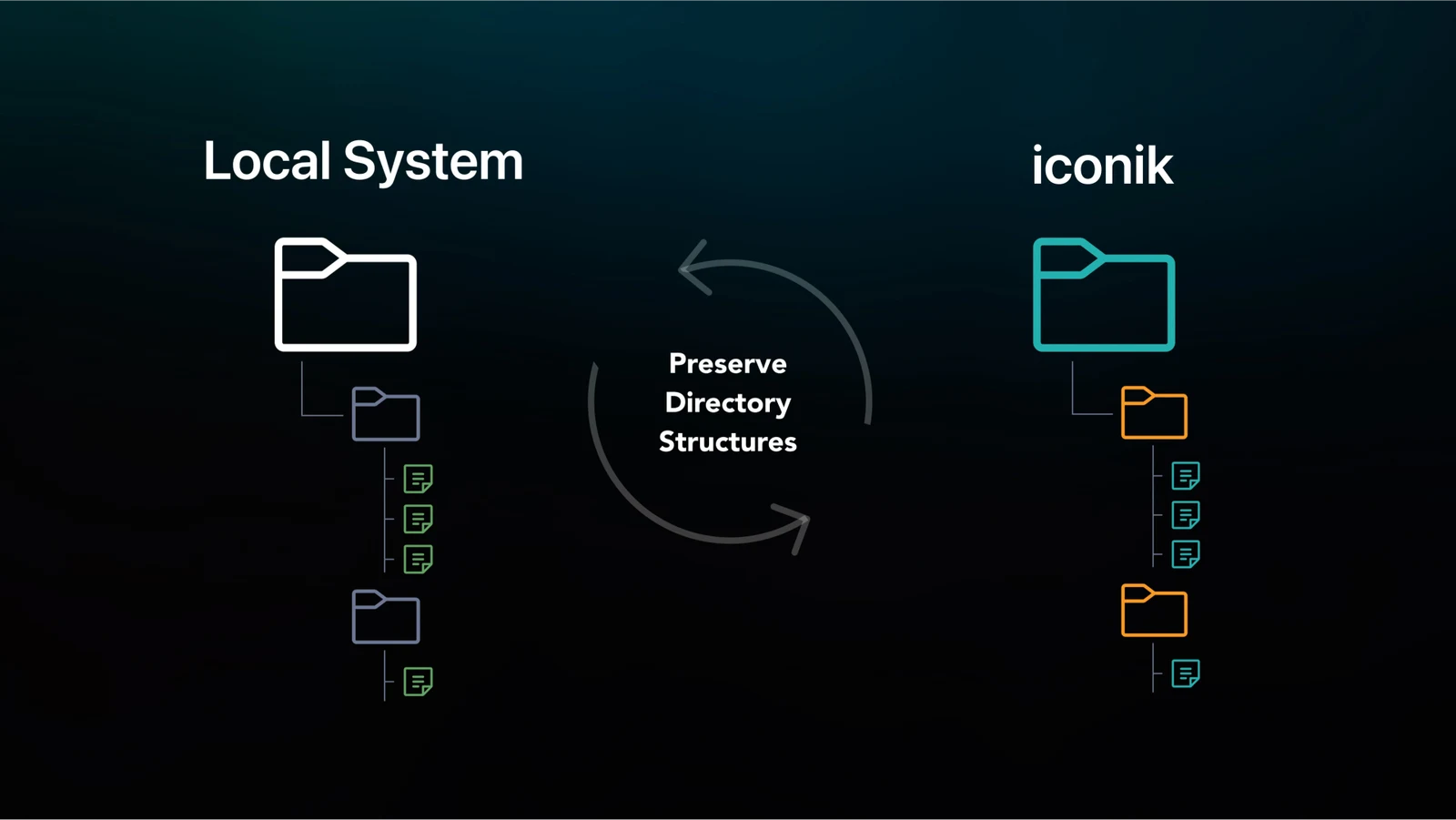
That narrowed the field to media asset management platforms with proper hybrid support. In the media production world, a MAM platform (as they’re usually shortened) is basically a searchable library that sits on top of your files, wherever those files live. Editors don’t rummage through folders looking for the right take. They search the library, preview clips in proxies (lightweight versions of the originals that stream easily over the internet), and drop them into their editing software. When it’s time to produce the final master, the platform triggers a reconnect from the proxy back to the full-resolution original file for the actual render.
Little versions for working, big versions for delivery. Everything indexed. Everything findable. Editors on different continents all seeing the same library.
Iconik came back into the picture here, this time for the right reasons. It’s a hybrid MAM: it can index on-premise storage and cloud buckets as a single searchable library. It generates proxies automatically. It provides native integration with Premiere Pro, Final Cut Pro, and DaVinci Resolve through panels that live inside the editing suite. The compliance story stacks up too (SOC 2 Type 2, EU data residency via Sweden, SAML single sign-on, forensic watermarking with IP-level session logging on the paid tier), which matters for the audit conversation.
Which pointed to Iconik as the direction, but a direction isn’t a purchase decision. We had to make sure the marketing pages weren’t oversimplifying anything critical.
Where it started to bend
They were, in a few places.
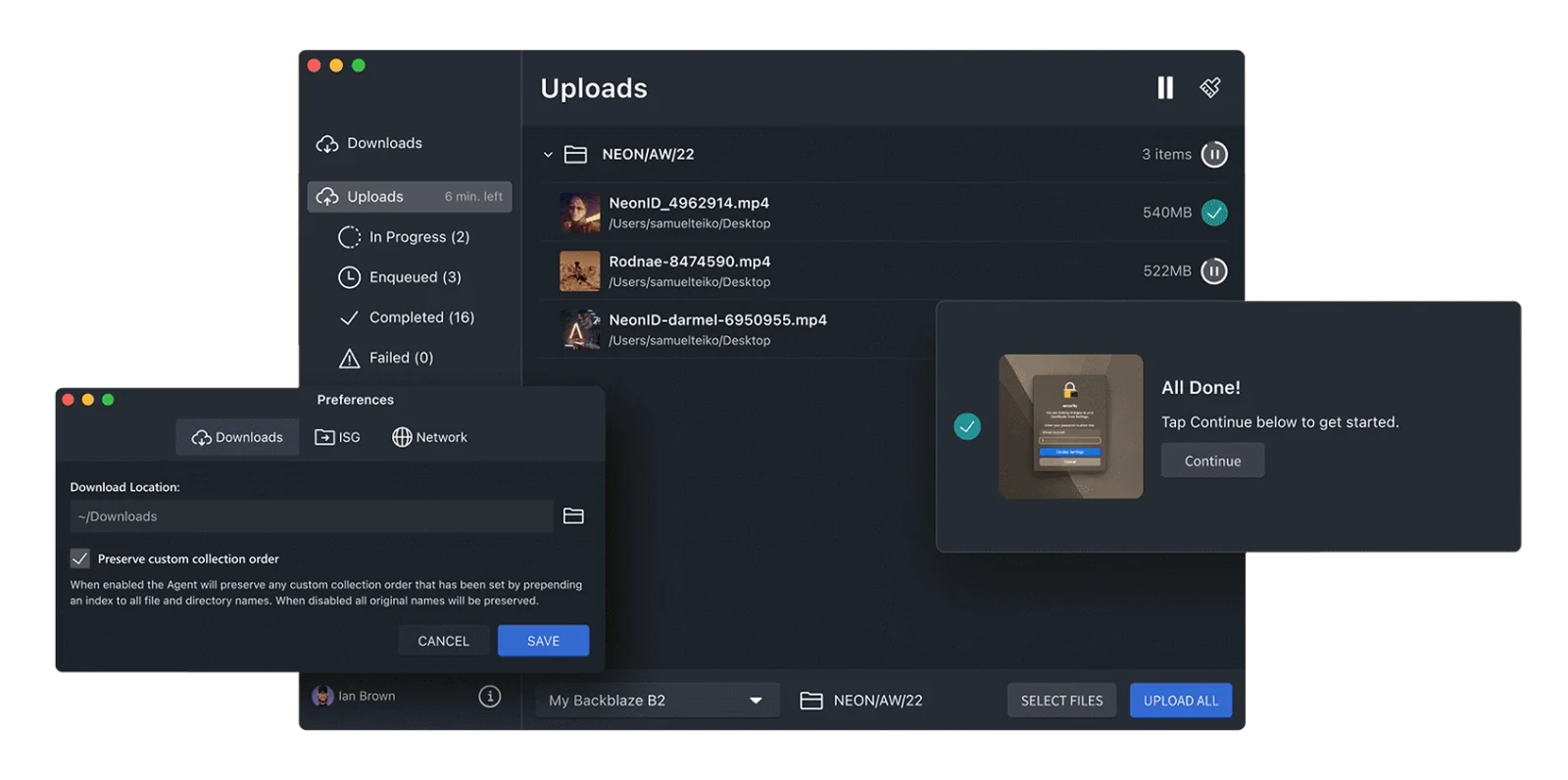
The vendor’s marketing implied that transcoding (the heavy work of converting massive original camera files into proxies) happened up in their cloud. It doesn’t, entirely. The Iconik Storage Gateway, or ISG (the piece of software you install to bridge your local storage to the platform), runs the transcode workload locally on whichever machine it’s installed on. Which means that machine needs to be hardware-capable, and can’t just be a thin relay. Fortunately Joe’s server was well over-specced for the job, so this was a “worth knowing” rather than a “back to the drawing board”, but the calculus around what needed to sit where changed.
One of the add-ons under consideration was pitched as letting multiple editors collaborate directly on the full-resolution files simultaneously. It sort of does that, but not in the way the sales page implied. And the licensing cost was substantial. Once we understood what it actually did versus what it looked like it did, it stopped earning its place in the architecture.
An accelerated file-transfer service had been in earlier thinking for the location shoot workflow. A fine product in its own right. But Iconik’s built-in upload-collection feature does the same job (external contributors get a secure upload link, files stream directly into the platform, no seat license consumed for the operator) without a separate subscription.
None of these findings made the direction wrong. It just meant the plan around Iconik was carrying weight it didn’t need to. And when the end client is going to audit the paperwork line by line, “weight it didn’t need to be carrying” is a phrase you want out of the file.
Two weeks with the software
Marketing pages are one thing. What a system actually does when you plug real files into it is another.
We ran the 14-day Iconik trial ourselves. Installed the ISG on real hardware, connected it to a real storage volume, and drove it through the workflows Clanmac would actually use in production. Ingest (the process of scanning material in) from a simulated location shoot. Ingest from a memory card at base. A pass over a body of existing archive material. A remote editor opening a project, cutting against proxies, triggering the conform (the reconnect from proxies back to full-resolution originals) for the deliverable.
Every step of that revealed something. Some things validated pieces of the emerging plan. Others flatly contradicted what we’d been told earlier in the process. By the end of the two weeks we had verified answers rather than assumed ones. That’s what buys you the ability to defend the architecture to a procurement team afterwards.
Making a scattered team work with a physical server
Here’s the crunch of the whole engagement.
Julie’s editors aren’t in the same building. They’re not even in the same country. Some are in Europe, some are further afield. Each one has to be able to browse Clanmac’s library, cut against proxies, and then somehow reach the full-quality originals when it’s time to render out the final piece.
The traditional way of solving that is: put the originals in a cloud storage bucket that anyone with the right credentials can reach over the internet. Which works, but it means paying for cloud storage indefinitely, and it partly defeats the purpose of the server Julie had already invested in.
The architecture we landed on keeps the server as the source of truth. Active production material can be optionally mirrored to a cloud storage tier during a project (IDrive e2 was the recommendation, with Backblaze B2 as an alternative if predictable per-TB egress mattered more than headline price), then removed once the project delivers. Editors reach the server directly over Tailscale, a secure network overlay Clanmac already had in place that lets machines behave as if they’re on the same office network wherever they physically sit. For projects where remote editors need faster pulls on the big files, the cloud mirror handles it. For everything else, the server does the job and there’s no ongoing cloud cost.
It’s a hybrid answer. A pure cloud setup would have been cleaner and probably simpler, but this fits Julie’s actual situation. A business with a real investment in its own kit, and a distributed team that needs to keep working around it.
Julie’s own instinct on this framed it well. Her line, early on, was that she wanted “all contingencies, even if hardly used”. Which turned out to be structurally right. There’s more than one route in and out of the library, so if one path is slow or unavailable on any given day, another works.
The disagreements
Not everyone agreed with all of it at every stage. Joe had strong views on parts of the architecture. Some grounded in other jobs he’d worked on, some based on his own reading of the platform documentation. That’s what a proper technical working process looks like. A group of people getting to the right answer together, with the vendor’s engineers in the room to confirm the details rather than opinions being traded back and forth.
We spent a fair bit of time in that mode. Probing, testing, verifying. Getting the awkward questions answered by the people who built the software, so nothing rested on assumption or memory.
By the end we had a set of decisions that were defensible from every angle. Technical, operational, and (crucially) audit.
Coming in for the landing
The contract got signed. Clanmac committed a serious annual investment to the platform. The system is up and running. The existing archive has been scanned and indexed. Remote editors are working against it. The end client’s procurement team got a system with the compliance credentials, data residency, and access controls documented properly.
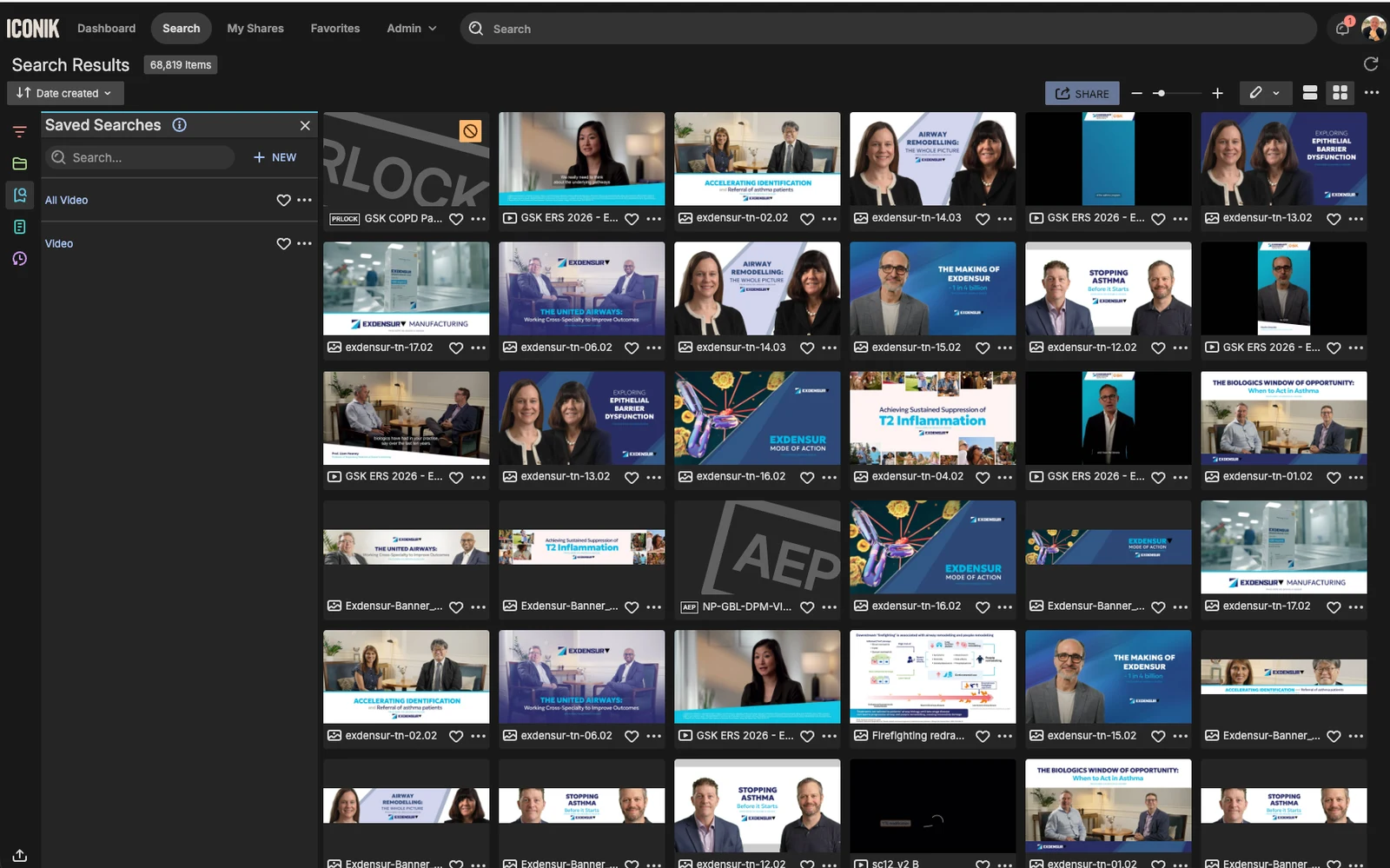
The work here was about making sure the money going out would buy a system that actually did what Clanmac needed, without carrying weight it didn’t need to.
What this actually was
38South Digital isn’t a reseller in the way that word usually means. And in this case, the end client’s procurement rules didn’t permit a reseller in the chain at all. Large pharmaceutical companies work that way for good reasons: to prevent conflicts of interest and to make sure the buyer isn’t quietly paying for someone else’s placement fee. Which meant we had to step back even further from a normal reseller arrangement, and be engaged as advisors only.
What clients get from us is the honest work: scrutiny of any plan already on the table, including our own first-pass thinking when the evidence tells us to update it; primary-source verification of the sales claims; a hands-on trial with the workflows that actually matter to that business; and the architecture that emerges when all of that has been done properly. In this case the right platform happened to be Iconik. On the next project it will probably be something else entirely.
If there’s a big system decision coming up in your business, and you’d rather have someone on your side of the table doing the homework before the money is committed, that’s usually where we start.
Iconik’s own docs explain how the Storage Gateway handles local transcoding and proxy generation — detail that changed our hardware requirements. Iconik documentation.
Tailscale’s documentation clarifies how a secure mesh lets remote editors appear on the same network without VPN complexity. Tailscale documentation.
Backblaze’s published pricing and egress model helped frame our recommendation when predictable per‑TB egress was a deciding factor. Backblaze B2 pricing.
IDrive e2’s product page provides the per‑object and per‑GB economics we used to model short‑term project mirrors. IDrive e2 details.
Something in your business look like this? We build the software, websites, automation and AI that fix it — and the writing that goes with them.
Book a chat →