
Turning years of health content into something you can ask
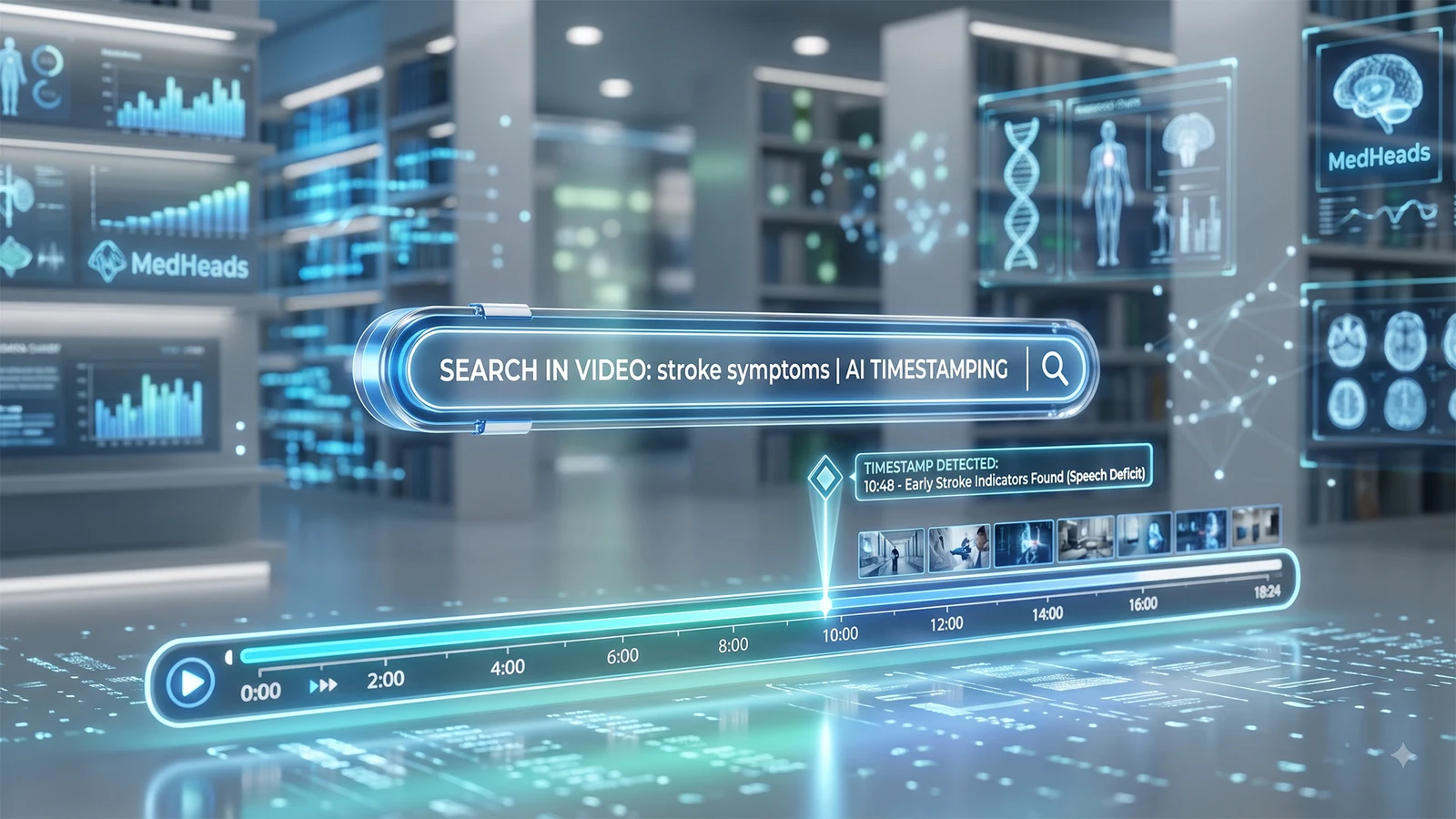
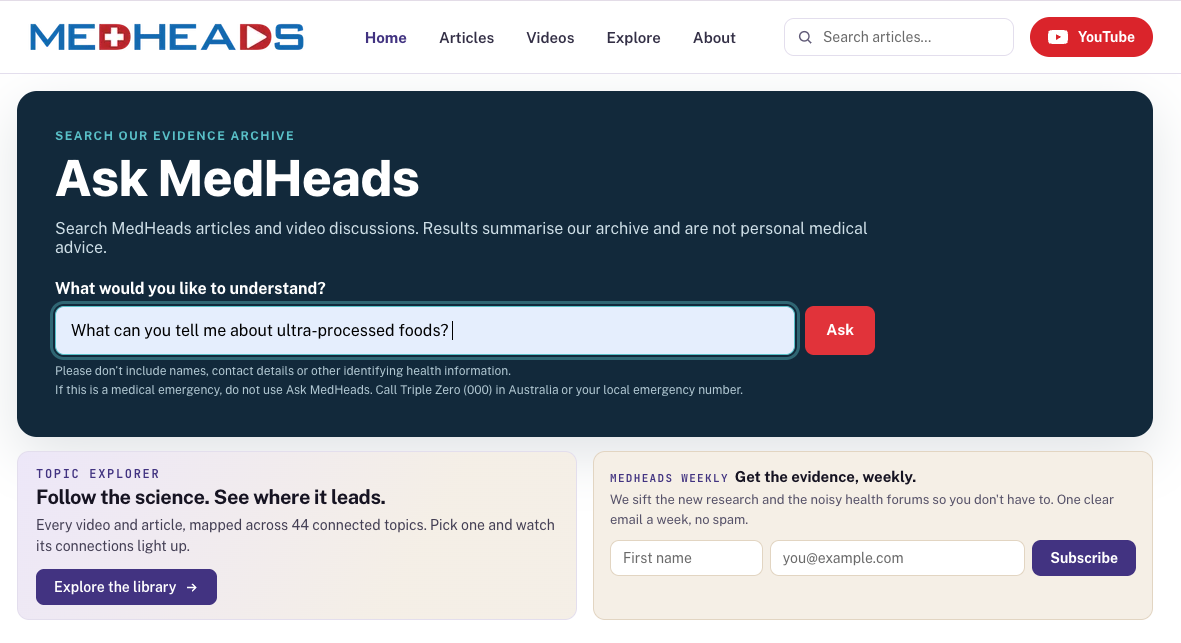
Medheads had years of articles and filmed clinician interviews that nobody could find their way into. So we made the archive answerable: ask a question in normal words, get an answer built only from Medheads material, with its sources shown and videos that open at the exact moment. Here's what we built, what broke first, and what it means for anyone sitting on an archive.

Medheads had a problem that a lot of organisations have and very few solve: years of good work that nobody could find.
Hundreds of articles. Hundreds of filmed interviews with clinicians. All of it useful, and all of it locked behind the same barrier — you could only find something if your search happened to match one of our headlines.
Someone wanting to know about benzodiazepine withdrawal, ultra-processed food or medicinal cannabis might well have found their answer sitting in the archive already. Getting to it meant scrolling articles, reading video descriptions and guessing which episode to try.
So we asked a simpler question: what if you could just ask, in normal words, and have the archive show you what Medheads has already covered?
Not another chatbot
The easy version of this is to bolt a general AI chatbot onto the website and let it answer health questions from whatever it happens to know.
That would also have been the wrong version.
This is health information. If the system can answer from the open internet, there’s no reliable way to tell where any statement came from — and a plausible answer isn’t the same thing as a supported one.
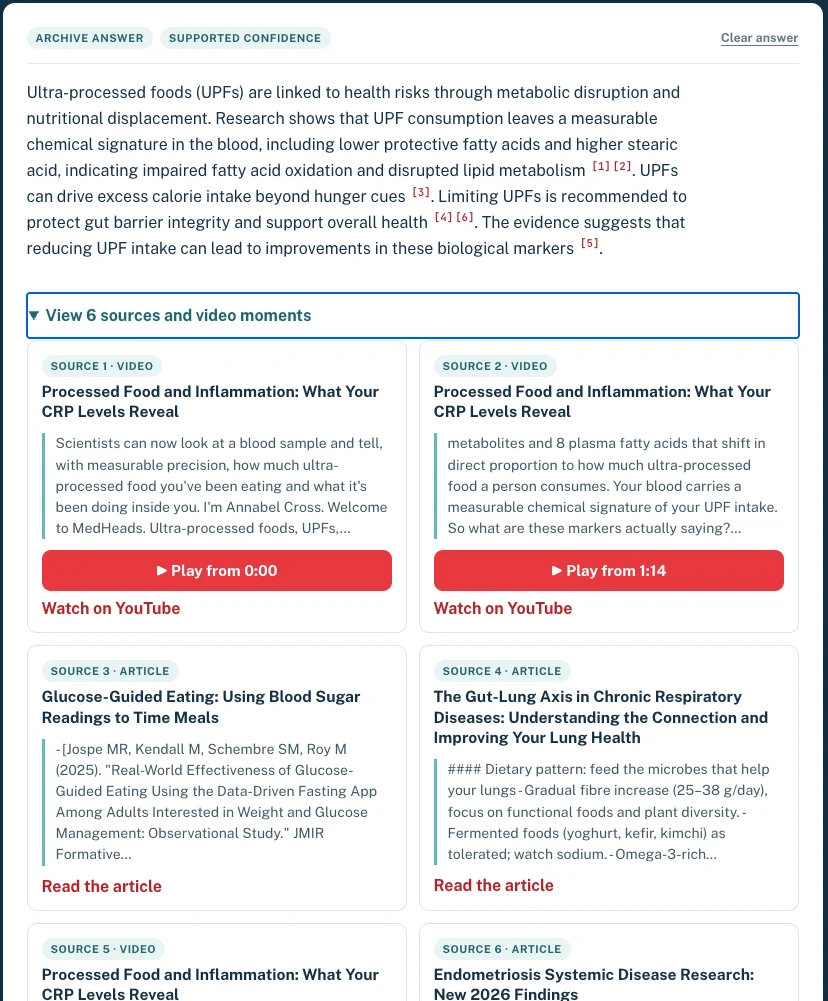
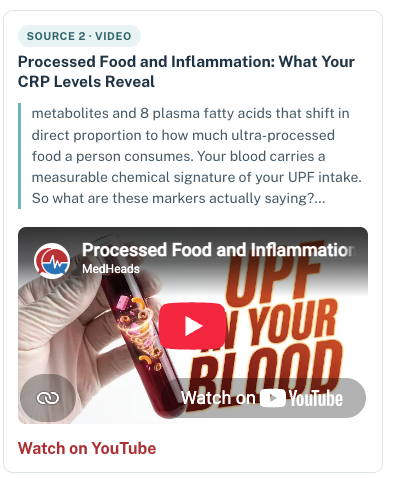
So Ask Medheads works inside a fence. When you ask a question, it searches the Medheads archive — published articles and video transcripts — and the AI is only allowed to answer from what it finds there. Every answer shows its sources. If the source is a video, you can jump straight to the moment it’s discussed, rather than being dropped at the start of a 40-minute interview.
And if the archive doesn’t have a good answer, the system says so. That last part matters more than it sounds: sometimes the most trustworthy thing an AI can tell you is that it doesn’t have the material.
What broke first
The interesting part of any build is what goes wrong.
Our first real test was “BIND tapering guidelines” — BIND being benzodiazepine-induced neurological dysfunction. Medheads has published on it. The search returned nothing at all.
The material was there. The system simply didn’t connect the acronym to the words used in the source articles. Exactly the kind of failure you want to find early, and a quick fix once we could see it.
The second one was bigger. “What do you have on cannabis?” returned a single video, when we knew there was far more.
That turned out not to be a search problem at all. Of 566 videos, only 18 had transcripts the system could actually read. The archive wasn’t failing to find things — most of it simply wasn’t in there yet. We reconciled the transcript libraries and got the searchable collection up to 129 videos alongside 166 articles.
Then we did something less glamorous but more useful: we wrote down 45 real questions across the topics Medheads actually covers, and measured how often the right source came back. The first version managed 17. The version running now gets 42.
That list of 45 questions is now a gate. A change to the search doesn’t ship because it feels cleverer — it ships when it still finds the right material across all 45.
How it actually finds things
We built the obvious version first, and the obvious version was wrong.
The obvious version sends your question to an AI, lets it work out what you meant, and then goes looking. It worked. It also added a delay to every single question, and handed a probabilistic model a job that well-built search does faster and more predictably.
So we turned it around. Search first, AI second.
Two searches now run at the same time, and they’re good at different things. One looks for the actual words — exact terms, names, acronyms. It’s still unbeatable when someone searches for something specific like nattokinase or pregabalin withdrawal. The other looks for meaning rather than words, so it can connect your question to a passage that answers it in completely different language.
Then the two sets of results are merged, under three rules we learned the hard way:
- An exact match never loses to a plausible one. Our first attempt treated both searches as equals. It was more elegant, and measurably worse — a near-miss on meaning could shove the precise answer out of the top five.
- One passage per source. Otherwise a single 40-minute transcript can crowd out every other article and video that deserved a place.
- If nothing comes back, the AI gets one attempt at rephrasing — expanding an acronym like BIND, or suggesting a couple of tighter phrasings — and the archive tries again. The model is a fallback, not the front door.
It’s also built to fail sideways rather than fall over. If the meaning-based search is slow or unavailable, the word-based one still answers. Questions are stripped of email addresses and phone numbers before they go anywhere near a model. And nothing in the chain is permitted to quietly substitute general internet knowledge for Medheads material.
Only at the end does the AI write anything. It gets a handful of passages, produces a short answer from those alone, and every citation is checked against the source list before it reaches you.
The whole round trip — around 3,000 passages searched, answer written, citations verified — comes back in about five or six seconds. It runs out of Sydney, close to both the database and most of the people using it.
Nothing gets published by a machine
An automatically assembled answer isn’t the same as a Medheads answer, and it isn’t presented as one.
Anyone can ask for a human review. That sends the question, the draft answer and its sources to a private review desk where the Medheads team can check the material, edit it, add or remove sources, approve it or throw it out. Anything touching diagnosis, treatment or medication needs clinical review before it becomes permanent.
Approving an answer also can’t quietly turn it into an article — that’s a separate, deliberate step.
A machine can prepare the work. Publishing stays a human decision.
The archive stays behind the answer
We wanted the interviews searchable without turning the website into a wall of transcript text.
Public answers show only short passages — enough to see why a source is relevant — plus the title and the timestamp. The full transcripts stay private.
That’s partly editorial and partly commercial. The YouTube channel is monetised, and reproducing an entire interview as text gives nobody a reason to watch it. The player never starts on its own: you press play, and the video begins near the part that answers your question.
The AI helps you find the discussion. It doesn’t replace it.
The same problem, somewhere else entirely
This isn’t really a media-archive problem. It shows up anywhere information piles up faster than anyone can recall it.
We hit the same thing in Helm, our private AI assistant. An assistant can store thousands of things about a business, but storing isn’t remembering — when you ask about a conversation from six months ago, it still has to surface the right one. The lesson from Ask Medheads applies directly: match the exact facts, and never let a plausible answer elbow out a precise one.
What this actually is
Ask Medheads isn’t a chatbot. It’s a way of getting the value back out of work that’s already been done.
The interviews still belong to the people who gave them. The videos still play on YouTube. The articles are still the original published work. What’s new is the way in: ask the question you actually have, see what’s been covered, check where the answer came from, and go to the source.
The first live questions have been just as useful for what they expose — missing transcripts, weak terminology, topics that need better coverage. Those gaps are now visible instead of disappearing into a search box that quietly returns nothing.
Plenty of organisations are sitting on the same problem. Years of videos, reports, webinars and documents full of genuine expertise, reachable only through filenames and someone’s memory.
If that sounds like yours, the next useful step probably isn’t producing more content. It’s making what you already have answerable.
Something in your business look like this? We build the software, websites, automation and AI that fix it — and the writing that goes with them.
Book a chat →